
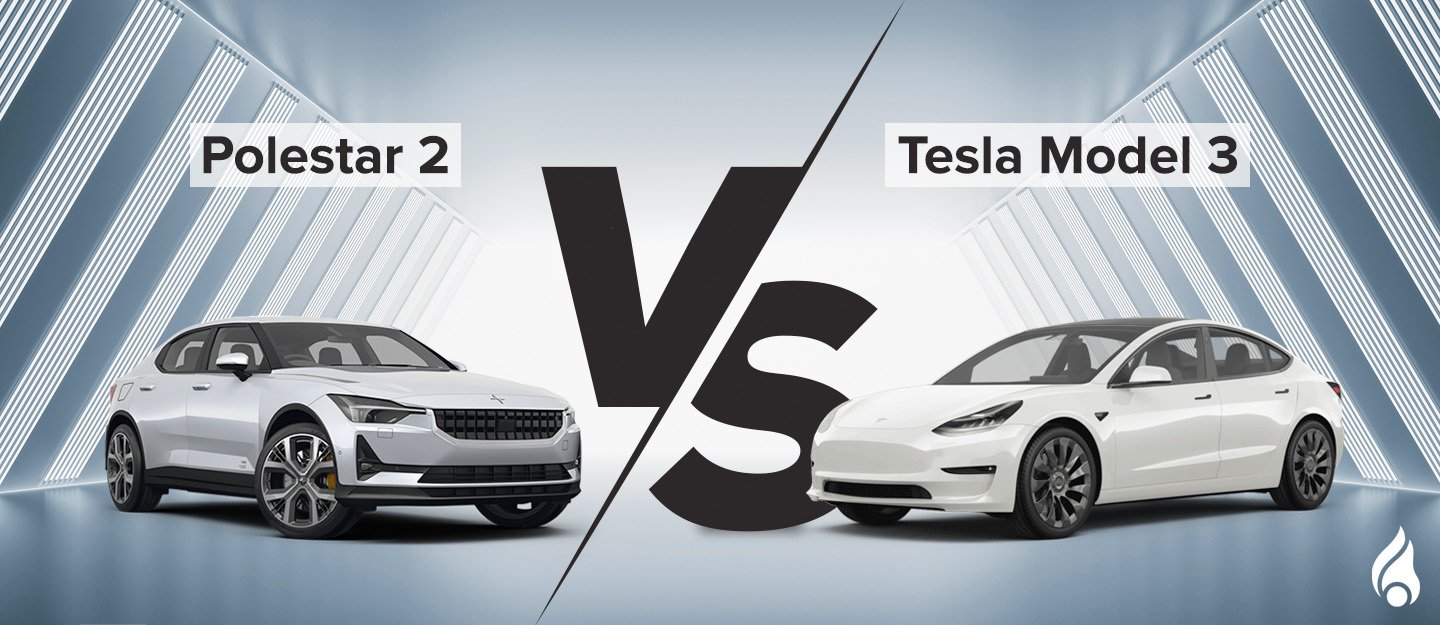
The Tesla Model 3 and Polestar 2 are highly rated luxury EVs with different strengths. Which comes out on top in a head-to-head showdown?
Polestar 2 vs. Tesla Model 3: Which Is Better?
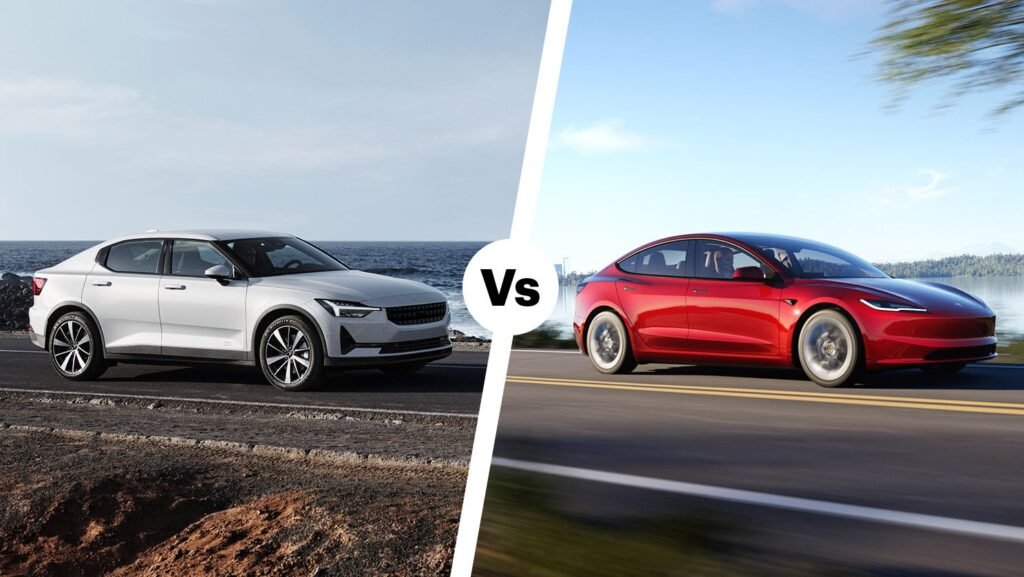
The Tesla Model 3 and Polestar 2 are two of the most acclaimed luxury electric vehicles on the market, each bringing its own strengths to the table. But when you line them up side by side, which one truly stands out?
Tesla’s reputation has faced its share of scrutiny over the years, yet the Model 3 continues to be one of the most popular and accessible luxury EVs. Meanwhile, competitors from other brands, including Polestar—a Volvo subsidiary—have emerged with compelling alternatives. The Polestar 2 is a standout in its own right, reflecting the design and engineering values associated with Volvo. But does it surpass the Tesla Model 3? Let’s break it down.
We based this comparison on U.S. News reviews and scores across several key categories, including driving range, reliability, safety, and more. Our rankings are updated as new data becomes available, so for the most current details, refer to the full reviews on our site.
Price
Winner: 2025 Tesla Model 3
The Model 3 Long Range with rear-wheel drive starts at $42,490. Choosing all-wheel drive adds $5,000 to the price, while the Performance trim, which comes standard with AWD, starts at $54,990.
The Polestar 2 has a single trim level priced at $64,800, with all-wheel drive included as standard.
Additionally, certain Model 3 trims are eligible for the federal EV tax credit, whereas the Polestar 2 is not.
Reliability
Winner: 2025 Tesla Model 3
According to J.D. Power predicted reliability scores, the Model 3 earns a 74 out of 100, placing it in the “Average” category. The Polestar 2 scores 65, considered “Fair” and below average.
The Model 3 comes with a four-year/50,000-mile limited warranty and an eight-year/120,000-mile battery warranty. The Polestar 2 offers a four-year/50,000-mile limited warranty and an eight-year/100,000-mile warranty covering the battery pack and electric motors.
Seat Comfort
Winner: Tie
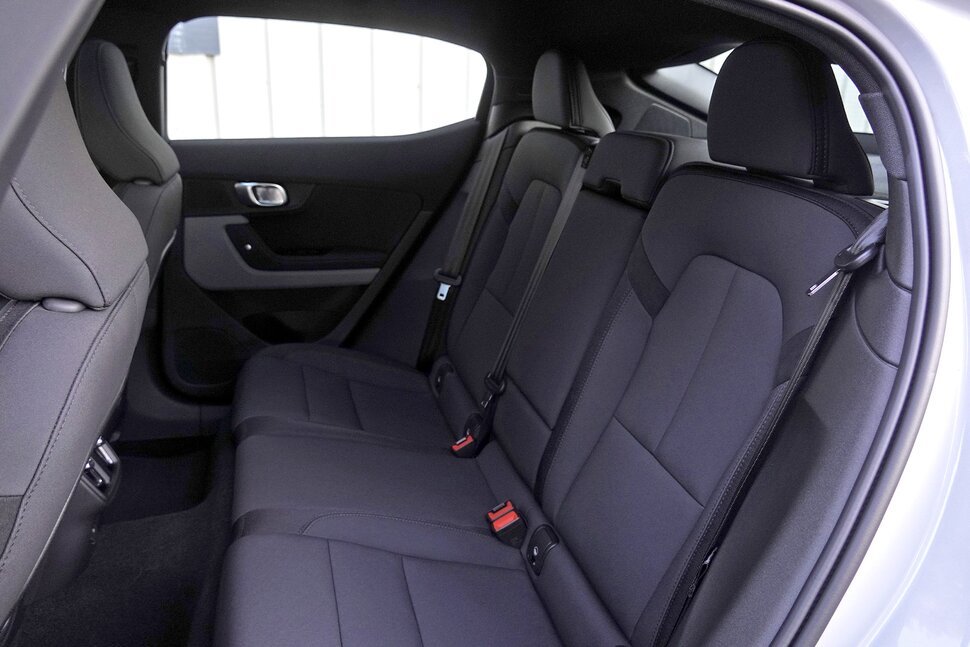
Both cars seat five passengers, though ideally, the rear seat accommodates two adults comfortably. The Polestar 2 provides supportive, plush seats, vegan synthetic leather upholstery, heated front and rear seats, and a heated steering wheel, with Nappa leather available.
The Model 3 matches in comfort, offering synthetic leather, heated and ventilated front seats, heated rear seats, and a heated steering wheel. While neither car has overly spacious rear seats for three adults, most passengers will find them comfortable.
Cargo Space
Winner: 2025 Polestar 2
The Polestar 2 offers 14.4 cubic feet behind the rear seats and 38.7 cubic feet when folded, plus a 1.2-cubic-foot front trunk.
The Model 3 provides 21 cubic feet in the rear trunk and an additional 3.1 cubic feet in the frunk.
Interior Quality
Winner: 2025 Polestar 2
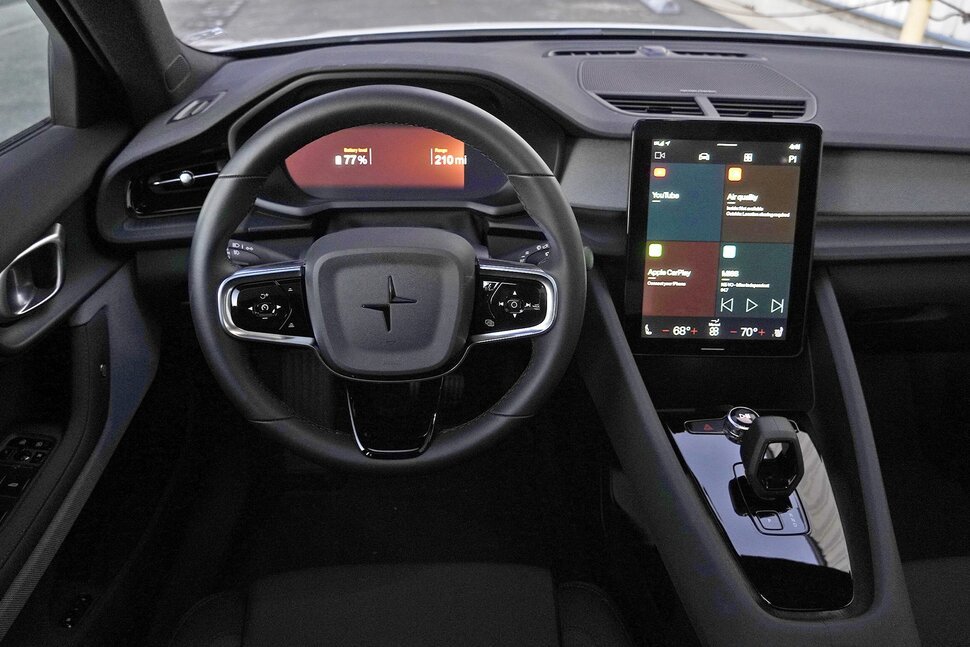
Tesla’s Model 3 interior is minimalist, centered on a large touchscreen. The 2024 refresh improved materials slightly, but it still lacks luxury appeal.
The Polestar 2’s cabin is also minimalist but more inviting, with high-quality, sustainable materials and a modern, premium feel.
Interior Features
Winner: Tie
The Model 3 includes a 15.4-inch touchscreen, Wi-Fi hotspot, navigation, wireless charging, an 8-inch rear infotainment screen, and unique features like Dog Mode, Camp Mode, Sentry Mode, and Caraoke. However, it lacks Apple CarPlay and Android Auto, which may frustrate some buyers.
The Polestar 2 features an 11.2-inch touchscreen, navigation, Apple CarPlay, Android Auto, Google Assistant, wireless charging, seat-activated start, and an activity key tag. Its tile-based interface is intuitive and user-friendly.
Both vehicles come with dual-zone automatic climate control, a panoramic roof, and cabin air filtration. Because each has unique advantages, we consider this a tie.
Acceleration
Winner: 2025 Tesla Model 3
The Polestar 2’s dual-motor 78-kWh powertrain produces 476 horsepower, reaching 0-60 mph in roughly 4 seconds—fast enough for confident highway merges and overtaking.
The Model 3’s base dual-motor 75-kWh setup produces 295 horsepower, achieving 0-60 mph in 4.9 seconds (RWD) or 4.2 seconds (AWD). The Performance trim outputs 510 horsepower and hits 0-60 mph in 2.9 seconds.
Driving Range
Winner: 2025 Tesla Model 3
Tesla excels in range. The Model 3 Long Range reaches 363 miles, while the Performance model offers 303 miles. The Polestar 2, by comparison, tops out at 254 miles.
Charging Time
Winner: 2025 Tesla Model 3
The Polestar 2 takes about eight hours to fully charge via a Level 2 charger, or 28 minutes to reach 80% at a DC fast charger.
The Model 3 adds roughly 30 miles per hour on Level 2 charging (full charge in ~11 hours) and can gain 200 miles in 15 minutes at a Supercharger, giving Tesla the edge for fast charging.
Ride and Handling
Winner: Tie
The Model 3 handles corners adeptly, thanks to a low center of gravity, although some body roll is noticeable. The ride is smooth, with effective regenerative braking.
The Polestar 2 is surprisingly agile, with responsive cornering and a cushioned ride over rough terrain. Its regenerative braking also supports one-pedal driving.
Safety
Winner: TBD
U.S. News has not assigned scores for either vehicle yet. The 2025 Polestar 2 received a five-star overall safety rating from the NHTSA.
Polestar 2 standard safety includes front, rear, and side parking sensors, forward automatic emergency braking, lane-keep assist, blind-spot monitoring, and a surround-view camera.
The Model 3 comes standard with forward automatic emergency braking, blind-spot monitoring, 360-degree parking sensors, and autopilot.
Final Verdict
Winner: 2025 Tesla Model 3
While the Polestar 2 and Tesla Model 3 are closely matched in many respects, the Model 3 edges ahead by winning more categories, including driving range, charging speed, acceleration, and reliability—all while starting at a significantly lower price.
The Polestar 2 shines with more cargo space, a higher-quality cabin, and a longer list of standard safety features.
Ultimately, both are excellent luxury EV choices. Test-driving each is the best way to determine which one suits your preferences and needs.